Pool Chemical Wash and MicroGlass in Yuma: Gentler Plaster Care
Pool Chemical Wash and MicroGlass in Yuma: Gentler Plaster Care
Yuma's water runs about 20.2 grains (345 ppm) of hardness, so scale and staining build on plaster faster than in most of the country. Every refill, every top-off on a 110°F afternoon, and every week of evaporation leaves a little more mineral behind on the walls and floor. A pool chemical wash in Yuma takes that buildup off without stripping as much plaster as an acid wash. Here's how the wash works, what MicroGlass adds after it, and when neither one is the right call.
What Yuma's hard water does to plaster
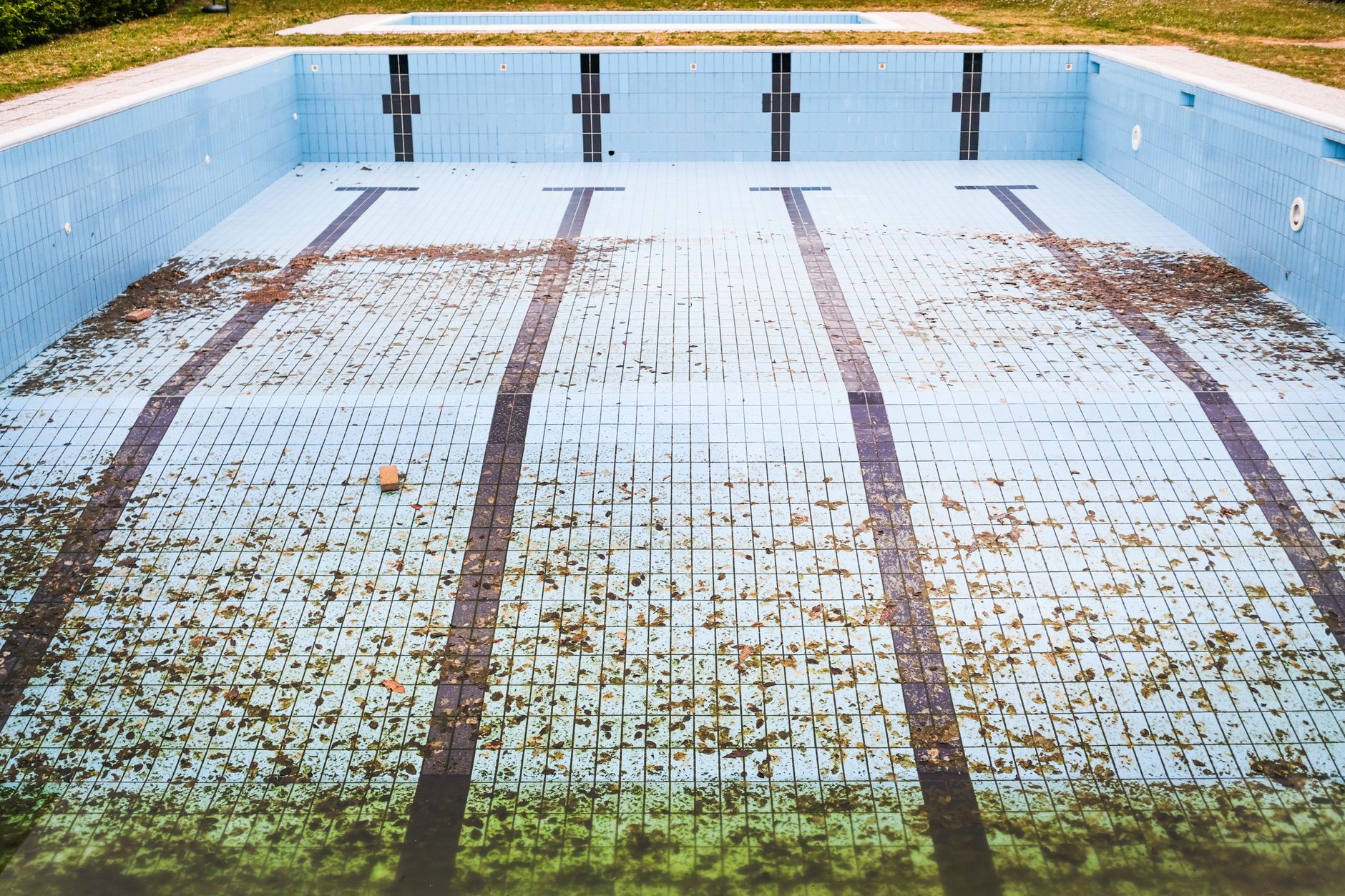
Plaster is porous. When pH climbs or the water heats up, dissolved calcium drops out of solution and settles into that surface. In Yuma, it shows up first as a faint gray or white haze on the walls, steps, and floor, then as rough patches you can feel under your hand.
That's not a maintenance opinion. At 20.2 grains, Yuma's fill water starts out loaded, and summer evaporation concentrates it further every week. Stains come along for the ride. Metals from fill water or equipment, plus leaves and dust that settle after a storm, bond more easily to a surface that's already rough with scale.
At Green Valley Pool Service & Repair, most Yuma homeowners we work with don't realize the crust on the tile line and the dull haze on the floor are often the same minerals. Regular brushing and balanced water slow it down. They don't reverse years of it.
Where stains and scale show up first
Check the steps, the benches, and the floor near the main drain, where water moves least. Check the waterline, where evaporation leaves the heaviest ring. Brown or rust-colored blotches usually point to metals or organic staining, blue-green often points to copper, and chalky white or gray roughness points to scale. Once any of it has bonded into the plaster, a brush and a test kit won't lift it.
That's when a drained wash earns its place.
How a pool chemical wash in Yuma differs from an acid wash
Both services start the same way: the pool is drained and the surface is exposed. From there, they part ways. An acid wash etches away a thin layer of the plaster itself and takes the stain with it. That works, and our acid wash service is still the right tool for some pools.
A chemical wash is gentler. It lifts stains and scale while removing less plaster — and that matters, because a finish only has so much thickness to give. If your pool has been acid washed before, or you'd rather not take more off the surface than you have to, the chemical wash is the acid wash alternative worth looking at first.
The chemical wash also stands on its own. MicroGlass is an option after it, not a requirement, and a wash by itself is a complete job.
Choosing between the two washes
The short version: the surface decides. Before we recommend a pool chemical wash in Yuma or an acid wash, we look at what the stain is, how deep it sits, how much finish is left, and how the pool has been treated in the past. Then we tell you which wash fits and put it in a written quote before anything is drained.
We'd rather take off less plaster than more.
What MicroGlass does, according to its maker
MicroGlass is the optional step after a chemical wash. It goes on in at least two coats, sprayed onto the clean, completely dry surface while the pool is still empty. Everything below about what it does comes from its maker — these are the manufacturer's descriptions, not results from our own testing.
Its maker says MicroGlass is a water-based treatment that soaks into plaster, quartz, or pebble and turns soft surface particles into a harder, glass-like layer. The maker reports less discoloration, craze cracking, etching, and plaster dust afterward, and says stains and scale are easier to clean off the treated surface. The maker also says it is not a waterproofer and doesn't sit on top of the finish like a sealer.
Here's the thing — the maker doesn't promise any added surface life, and neither do we. What its maker describes is a harder surface where the same Yuma minerals that sent you looking for a wash are easier to clean off next time. That's the reason to consider it.
Timing is part of the decision. MicroGlass goes on while the pool is still empty, so you'll choose whether to add it before the refill, not after. We cover it during the quote, so you're not deciding on the spot with a drained pool in the yard.
Which finishes it's made for
Its maker built MicroGlass for white plaster, quartz, and pebble finishes. It is not for vinyl, fiberglass, or painted pools, and if your pool is one of those, we'll tell you on the first visit. It also can't go on at 44°F or colder, which shapes how we schedule winter jobs.
How to tell whether your finish can be washed
A wash cleans a surface. It doesn't rebuild one. If your plaster is cracked, flaking, or coming loose — patches lifting at the steps, or a hollow sound when you tap an area — no wash, chemical or acid, will fix that. Neither will MicroGlass.
That finish needs repair or a replaster first. Green Valley doesn't replaster pools. We refer that work out, and we'll tell you so on the first visit instead of draining your pool for a wash that can't help.
That's where pool plaster restoration in Yuma actually starts: a finish that's structurally sound but stained, scaled, dull, or rough from mineral buildup. A surface can look tired for years before anything is wrong with it underneath.
If we see thin or worn areas that aren't failing yet, we'll point them out so you can weigh a wash against the life the finish has left.
"I'd rather tell you a wash won't help than sell you one that doesn't. If we walk your pool and the plaster is coming loose, we'll say so before anything gets drained, and we'll point you to the next step." — Casey Roloff, Owner
Why we schedule drained washes from November through spring
Timing matters as much as technique. Yuma summers regularly push above 115°F, and an empty pool in that heat is something we plan around, not something we gamble on. Cooler months, from November on, are the drained-wash season for a pool chemical wash in Yuma, and every job is planned so the surface isn't left empty in the heat.
Winter brings its own limit. MicroGlass can't go on at 44°F or colder, and Yuma gets the occasional cold snap. When you add MicroGlass to a winter job, we schedule the application around the forecast instead of forcing it onto a cold morning.
Draining also comes with rules. Arizona and local water restrictions can affect when and how a pool is drained and refilled, and those rules change. We check current requirements before we schedule a drain, and refill timing follows them. Refill water isn't part of the wash quote — it's a separate cost.
Cool weather, a clear forecast, and a short empty window. That's the plan on every job.
How we run a chemical wash from first look to refill
We added chemical wash and MicroGlass to our repair division in November 2026. Like the acid wash, it's restoration work, not routine maintenance, and every Yuma pool chemical wash we run follows the same order:
- On-site look. We walk the pool, confirm the finish type, identify the staining, and check that the surface is sound enough to wash.
- Written quote. You get it in writing before anything is drained. There's no published pricing yet, because pool size, finish, and staining all change the work.
- Drain. The pool is drained within current water restrictions.
- Chemical wash. Stains and scale are lifted from the plaster, quartz, or pebble surface.
- MicroGlass, if you choose it. Once the surface is clean and completely dry, it's sprayed on in at least two coats — above 44°F only.
- Refill and startup. The pool is refilled and the water is balanced from day one, because fresh Yuma fill water is already hard.
If your tile line carries its own crust, that's a separate job. Our tile cleaning for hard-water scale removes the calcium ring at the waterline with a chemical treatment, and some owners schedule it alongside their pool chemical wash in Yuma.
We've been voted Yuma's Best by Yuma Sun Reader's Choice 11 separate times since 2001, and we've worked pools in this climate for more than 55 years. Hard water doesn't take a season off. If you're already on pool service in Yuma with us, your technician can flag new staining long before it needs another wash.
Frequently Asked Questions
How is a chemical wash different from an acid wash on a pool?
Both services require draining the pool, within current Arizona and local water restrictions. An acid wash etches away a thin layer of plaster and takes the stains with it. A chemical wash is gentler — it lifts stains and scale while removing less plaster, which makes it a practical acid wash alternative for a finish you want to keep. Which one fits depends on what we find during the on-site look, and you'll get a written quote first.
Does MicroGlass pool treatment work on vinyl or fiberglass pools?
No. Its maker designed MicroGlass for white plaster, quartz, and pebble finishes, and it is not for vinyl, fiberglass, or painted pools. On the right surface, MicroGlass pool treatment is an optional step after a chemical wash, sprayed in at least two coats once the surface is clean and completely dry. If your pool has a finish it isn't made for, we'll tell you during the on-site assessment.
How much does a chemical wash cost for a pool in Yuma?
We don't have published pricing yet — it's coming soon. Every job starts with an on-site look, because pool size, finish type, condition, and the kind of staining all change the work involved. You'll get a written quote before anything is drained, and nothing starts until you approve it. Refill water is a separate cost and isn't included in the wash quote.
Can you do a chemical wash or MicroGlass during a Yuma winter?
Yes. Cooler months, from November on, are the drained-wash season in Yuma, and we plan every job so the surface isn't left empty in the heat. The limit is temperature: MicroGlass can't go on at 44°F or colder, so we schedule winter applications around cold snaps. Arizona and local water restrictions can also affect when a pool is drained and refilled, and we check them before scheduling.
Will a chemical wash fix cracked or flaking pool plaster in Yuma?
No. A chemical wash handles pool stain removal in Yuma on a finish that's still sound — stains, scale, and mineral buildup. Cracked, flaking, or loose plaster needs repair or a replaster first, and Green Valley refers that work out. If we see a failing finish during the assessment, we'll tell you before anything is drained, so you don't pay for a wash that can't help.
If your plaster is stained, scaled, or rough and you want to know whether a chemical wash for your pool in Yuma will help, the first step is an on-site look. We'll check the finish, tell you which wash fits — or whether one fits at all — and put it in a written quote before anything is drained. Contact us to schedule an on-site assessment or call us at (928) 597-9196.