Hard-Water Scale on Pool Tile: Yuma's Number One Cosmetic Issue
Hard-Water Scale on Pool Tile: Yuma's Number One Cosmetic Issue
Yuma municipal water routinely tests above 300 ppm hardness — among the hardest tap water in Arizona — and every gallon that evaporates from your pool leaves those dissolved minerals behind. The white crust forming along your tile waterline right now is hard water pool tile scale in Yuma, and understanding why it appears so fast is the first step toward keeping it manageable.
What is that white crust, exactly
The deposit on your tile line is calcium carbonate — the same compound that furs up showerheads and coats hot water heater elements. When pool water evaporates, it leaves dissolved calcium and magnesium behind. Those minerals bond to the tile surface at the waterline, where the water meets air and evaporation is most active.
In most U.S. markets, this process is slow enough that annual tile cleaning handles it comfortably. In Yuma, the math is different. The source water arrives already high in minerals, and summer heat removes the water carrier at an accelerated rate. What takes six months to build up in a lower-hardness market can form a visible crust here in weeks. For pools with significant staining that extends below the waterline, an acid wash service may also be relevant — though that is a separate assessment from tile-line scale removal.
Why summer makes it dramatically worse
Evaporation is the engine that drives hard water pool tile deposits in Yuma. The hotter and drier the air, the faster pool water evaporates — and Yuma summers are among the hottest and driest in the country. A pool that loses half an inch of water per day in July is concentrating its mineral load continuously.
There is a compounding factor: most homeowners top off their pools during summer to maintain the waterline. Every gallon of Yuma municipal water added to replace what evaporated brings another dose of dissolved minerals with it. The pool's calcium hardness level climbs steadily unless you are actively managing it or periodically diluting through a partial drain and refill.
Pool tile scaling in the Arizona desert, then, is not a sign that something is wrong with your pool — it is a predictable consequence of running a water feature in an extreme evaporative environment with hard source water.
What it looks like at each stage
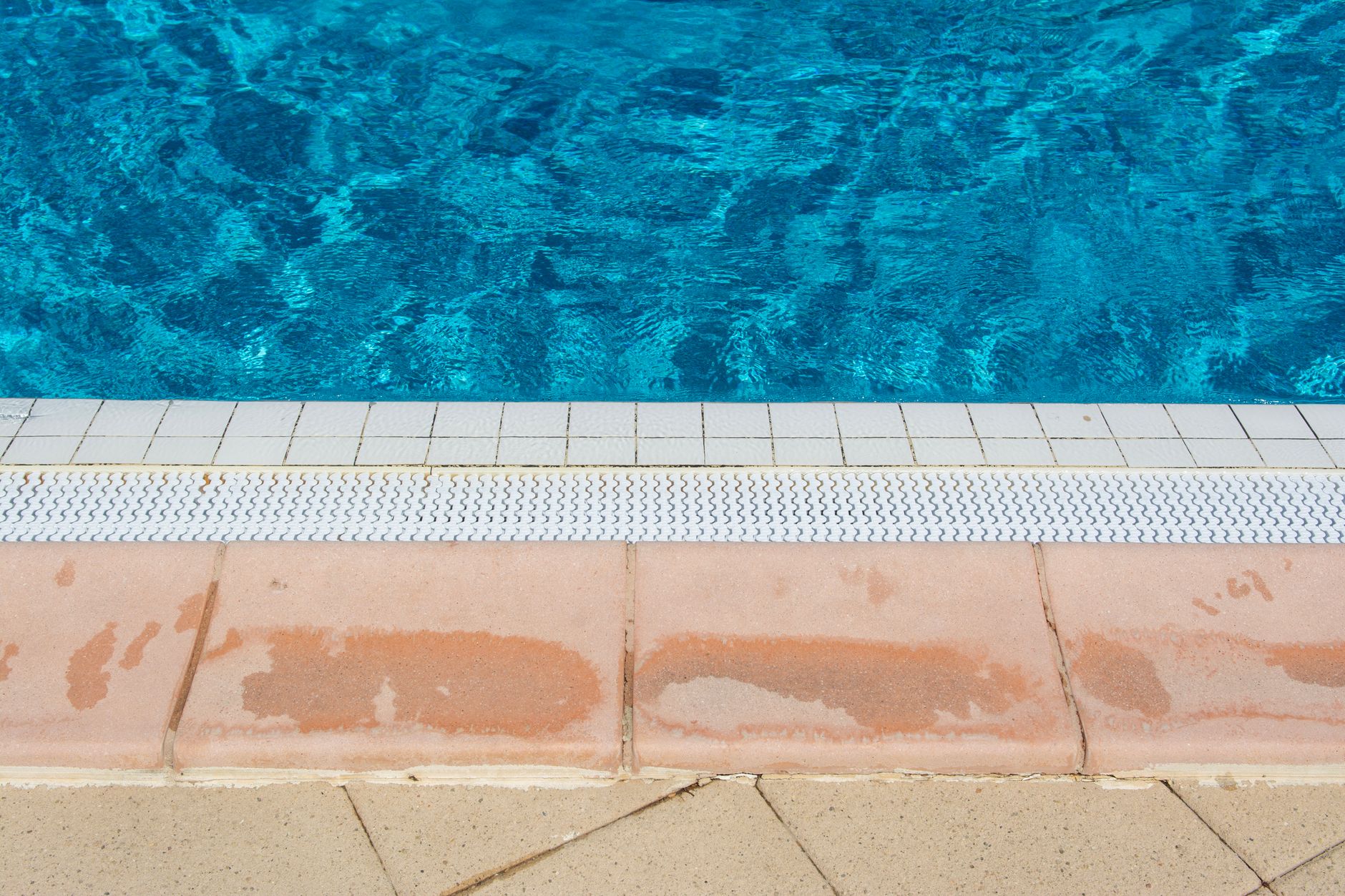
Scale starts as a faint haze at the waterline — easy to miss against lighter tile colors, more obvious on dark blue or dark grey tile. Left alone through a full summer, it thickens into a textured white or grey band. At that stage it feels gritty to the touch and resists a brush.
By the time scale is a quarter-inch thick or more, it has often begun trapping debris inside its porous surface. That is when calcium scale pool tile deposits start affecting water chemistry: organic material embedded in the deposit creates a slow demand on chlorine that is easy to confuse with other balance problems.
The visual signal to act is when you can run your finger along the tile waterline and feel a distinct ridge. That is deposit thickness that a standard brush pass will not remove — and the longer it stays, the more force is required to get it off without damaging the tile.
Why this is harder to fix than it looks
Most Yuma homeowners we work with have tried pumice stones, tile brushes, or store-bought calcium removers on their waterline. Those tools work on thin, fresh deposits. The scale that builds through a full Arizona summer is dense calcium carbonate that has partially crystallized onto the tile surface. Mechanical scrubbing at that stage risks scratching the tile face, and acidic household products rarely penetrate deep enough to dissolve the bond at the base of the deposit.
The professional standard for heavy calcium scale pool tile removal is bead blasting — a controlled abrasive process that removes the deposit without contacting the tile glaze. It gets into grout lines and contoured surfaces that hand tools miss entirely.
We do not recommend framing this as a DIY project for Yuma pools mid-summer. Our tile cleaning for hard-water scale service handles it correctly from the start, without the risk of etching or discoloration that aggressive DIY approaches can leave behind.
What happens if you wait until fall
There is a common pattern in Yuma: homeowners notice the scale in July, decide to address it when the heat breaks, and by October they are looking at a deposit that is twice as thick and significantly harder to remove.
Scale does not pause during summer. Every week of high evaporation adds another layer. Acting before the deposit fully sets keeps the cleaning straightforward and protects the tile surface from the additional abrasion that heavier removal requires. For a full breakdown of removal methods, timing, and what to expect from a professional cleaning, see our complete guide to pool tile scale removal.
How ongoing maintenance slows the buildup
Tile scale is not entirely preventable in Yuma — the source water is what it is. But it is manageable. Keeping calcium hardness in the 200–400 ppm range and maintaining proper pH (7.4–7.6) slows the rate at which calcium carbonate precipitates onto surfaces. High pH is a major accelerant: when the water becomes more alkaline, calcium drops out of solution faster.
Twice-weekly service visits — standard for Yuma pools during summer — include chemistry checks that catch rising calcium hardness and pH drift before they accelerate scale formation. Our pool service in Yuma routes include waterline observations specifically because we know how fast conditions change in July.
For homeowners on our residential maintenance plans, waterline condition is part of the standard visit checklist. We note changes, flag acceleration, and recommend professional tile cleaning before deposits reach the stage where removal requires more aggressive methods. Voted Yuma's Best by Yuma Sun Reader's Choice 11 separate times since 2001, Green Valley Pool Service & Repair has been managing hard-water scale on Yuma tile lines longer than most pool companies in the area have been in business — and we know the pace at which it builds here.
Frequently Asked Questions
Why does scale build up on my pool tile so fast in Yuma?
Yuma municipal water routinely tests above 300 ppm hardness — among the highest in Arizona. When summer heat accelerates evaporation, the dissolved minerals left behind concentrate rapidly and deposit as calcium carbonate on your tile waterline. The hotter and drier the conditions, the faster hard water pool tile scale in Yuma accumulates.
Is the white crust on my pool tile actually hurting anything?
Cosmetically, yes — it is the most visible sign of hard water in your pool. Structurally, heavy calcium scale can also trap moisture behind tile grout, weaken the bond over time, and make future cleaning harder and more abrasive. Catching it early keeps removal simpler and protects the tile surface.
Can I remove calcium scale from pool tile myself?
Light deposits sometimes respond to a pumice stone or a diluted acid solution, but Yuma's scale is dense enough that DIY methods often scratch tile or spread the problem. Professional bead-blast tile cleaning removes scale without damaging the tile face — and gets into grout lines where hand tools cannot reach.
How often should pool tile in Yuma be professionally cleaned?
Most Yuma pools need professional tile cleaning once a year at minimum. Pools with heavy evaporation exposure — uncovered, running long filter cycles, or with water features — may need service every six to nine months. An annual inspection tells you where your pool falls on that range.
If your tile line is showing a white crust right now, mid-summer is the right time to address it — not after the deposit spends another two months hardening. Schedule a tile cleaning assessment or call us directly at (928) 597-9196. We will look at the waterline, tell you what stage the deposit is at, and give you a written estimate before any work begins.